

How to Choose a Static Voltage Stabilizer Manufacturer: Selection and Factory Testing
Two static voltage stabilizers may both be rated at 200 kVA, yet one may have an input range of ±15% while the other offers ±10%. The same capacity rating does not mean they can handle the same supply conditions.
Comparing only capacity and price can overlook three important questions: Does the input range cover the site’s voltage variations? Can the equipment handle the load’s starting current? Do the factory tests reflect the intended operating conditions? These factors affect equipment suitability and site acceptance.
The following checks follow the practical steps of a procurement assessment.
Check Six Site Conditions Before Selecting a Stabilizer
Start by listing the equipment requirements and site conditions, then check whether the supplier’s proposed product can meet them.
| What to check | Why it matters |
|---|---|
| What are the highest and lowest site voltages? Does the input range cover them? | The stabilizer cannot provide normal correction outside its operating range. |
| What output voltage and tolerance does the equipment require? | An unsuitable output tolerance can cause protective trips or abnormal operation. |
| What are the continuous and peak starting currents? | Motor and compressor starting currents may exceed the stabilizer’s short-term load capability. |
| Does the application require output frequency control? | SCR output frequency follows the input; Winzele WPZ can control it according to the selected configuration. |
| Is the supply single-phase or three-phase? For three-phase systems, is it three-wire or four-wire? | The phase configuration and wiring must match the site distribution system. |
| What ventilation and cooling are available at the installation location? | Cooling capability affects the load the equipment can sustain. |
Frequency requirements are easy to overlook. Winzele offers two types of static voltage stabilizer. Its SCR thyristor static voltage stabilizers follow the incoming supply frequency and cannot adjust it independently. Its WPZ IGBT static voltage stabilizers use an AC–DC–AC architecture: incoming AC is rectified to DC and then converted back to a controlled AC output. Output voltage and frequency are controlled according to the project configuration. SCR provides AC voltage correction; WPZ also serves projects requiring both voltage and frequency control.
Distinguish between maintaining a specified output frequency while the input frequency varies and converting between frequencies, such as from 50 Hz to 60 Hz. WPZ can be configured for the relevant requirement. The input frequency range, target output frequency and permissible deviation should be defined in the technical proposal.
If the main requirement is voltage correction, start by assessing SCR, then check its input range, dynamic performance and load capability. If frequency stabilization or conversion is also required, assess the corresponding WPZ configuration.
For a detailed comparison of the three technologies, see the Servo vs SCR vs IGBT voltage stabilizer selection guide.
How to Read Static Voltage Stabilizer Specifications
Capacity, input range, output accuracy and response time appear in supplier documentation, but each needs to be understood under its stated operating conditions.
Rated kVA alone does not establish load capability. Confirm whether the equipment can deliver the required output capacity at the site’s lowest input voltage. Check for derating, current limits or operating-time restrictions. For motor starting and cyclic loads, ask about the permissible peak current and how long it can be sustained.
Compare the input range with site measurements. A stated range of ±20% does not mean the site supply always stays within it. Record the highest and lowest voltages and check the extremes against the equipment’s operating range. If a voltage sag is too deep or lasts beyond the equipment’s compensation capability, a stabilizer alone will not resolve it; additional measures are needed.
Output accuracy depends on the test conditions. A specification such as ±1% applies under defined input and load conditions. Resistive, inductive and nonlinear loads can affect output regulation differently. Ask which conditions support the stated accuracy.
Response-time figures need a common definition. Some specifications describe the start of the response; others describe the time taken for the output to return within tolerance. These are different measurements. Detecting a voltage change, starting correction and restoring the output are distinct points in the process. Compare the input disturbance, load conditions and acceptance criteria alongside the manufacturer’s time specification.
How to Assess Manufacturing and Factory Testing Capability
For industrial projects, the relationship between specifications and factory test conditions matters for acceptance. Review system integration, wiring, cooling design and test arrangements.
System integration and assembly. A stabilizer is a complete system integrating power modules, controls, transformers, enclosures and cooling. Understanding how the supplier integrates the power devices, controls and compensation transformers, assembles the cabinets and arranges cooling helps establish what will be delivered. Assembly information should be considered alongside the project-specific technical proposal and test arrangements.
Winzele’s SCR production includes thyristor power-module and control-system assembly, compensation-transformer integration, cabinet assembly, factory commissioning and load testing. WPZ assembly, electrical wiring, component integration and final configuration are completed at the factory.
Conditions covered by factory testing. Factory tests verify operation under the voltage, frequency and load conditions agreed for the project. WPZ testing covers the ordered configuration, including inductive load conditions, with panel readings checked against the specified output voltage and frequency.
Distinguish these manufacturing and testing activities from the acceptance documents agreed for a particular order. During contract discussions, buyers can specify the required acceptance checks and deliverables, such as test records or a written report. The activities performed at the factory and the documentation supplied under the contract are related but separate matters.
Whether the technical proposal addresses the site. A suitable proposal should address the input conditions, load information, target output and acceptance requirements, and explain the selected model’s operating limits. A model number, kVA rating and price alone are not enough for a technical assessment. Factory photographs provide context, but should be reviewed together with the proposal and testing arrangements.
Consistency between specifications and test conditions. Define rated capacity, input voltage range, load conditions and permissible output deviation in the technical proposal and contract. This provides a common basis for factory testing. Unclear specifications or test conditions that do not reflect the application can lead to acceptance disputes.
How to Use Project Cases in Your Assessment
Project cases help buyers understand how equipment was configured for a particular task. They are not evidence that a product can meet every application requirement.
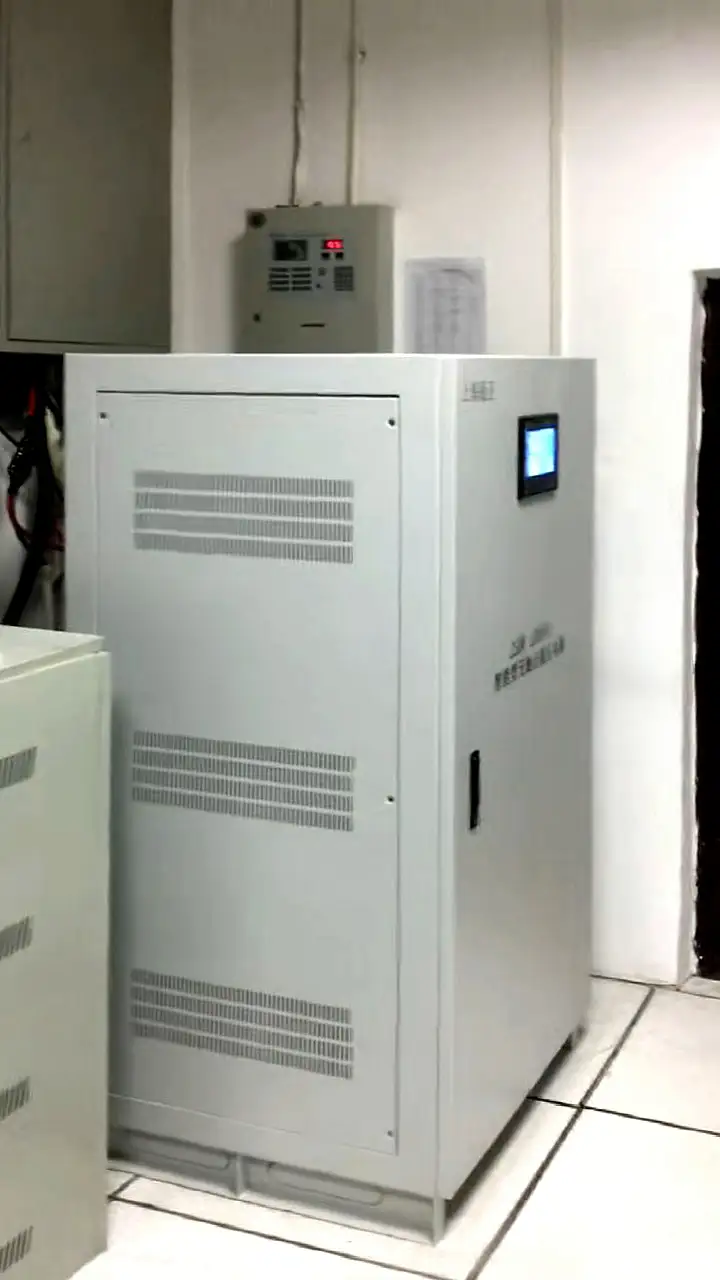
In the bank project, focus on how the high incoming voltage was addressed and how the recorded input relates to the output. The 418–420 V input and 381–383 V output are readings from that specific installation.
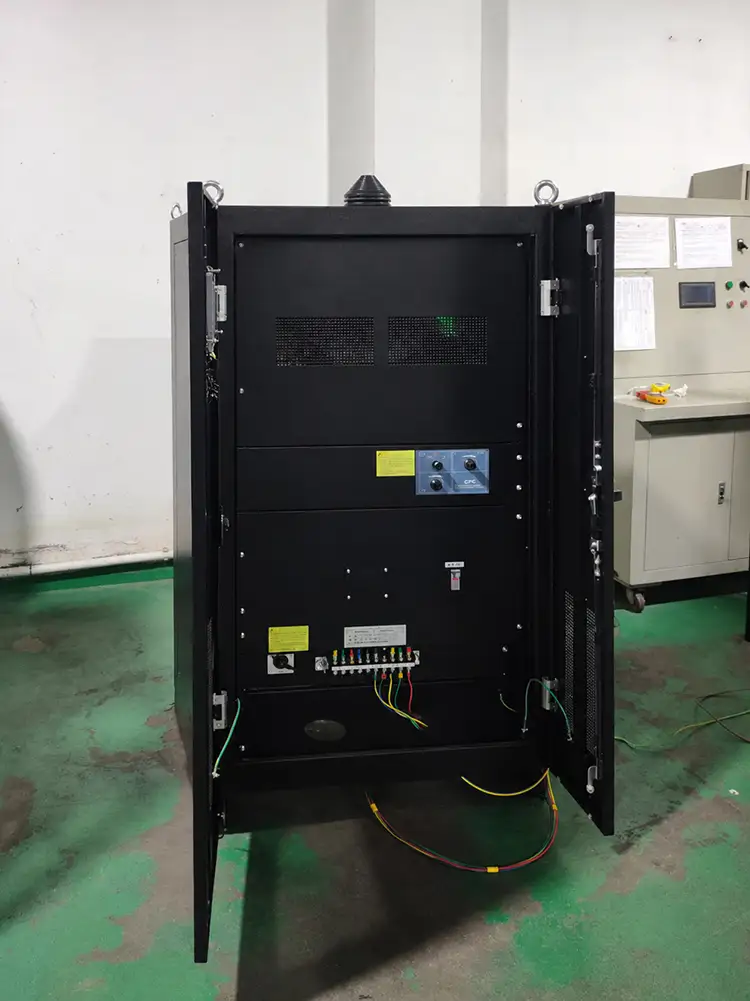
In the marine equipment project, focus on the target voltage, frequency and test load. The system converted a 380 V / 50 Hz workshop supply to 440 V / 60 Hz for testing and commissioning marine equipment.
Both projects used capacity and settings selected for their own operating conditions. Their results should not be applied unchanged to another installation. Input range, capacity and frequency configuration need to be assessed for the new site.
For more configurations and industry applications, visit the static voltage stabilizer application library.
What to Prepare Before Requesting a Quotation
Clear information helps a supplier prepare a relevant proposal and quotation with fewer revisions. You can start an enquiry before every detail is available, then add measurements and documents as the assessment progresses.
| Information | What to provide |
|---|---|
| Equipment nameplate | Rated voltage, power, current and number of phases. |
| Site voltage records | Highest and lowest measured voltages; sag depth and duration where applicable. |
| Load information | Maximum continuous current, starting or cyclic peak current, and its duration. |
| Output requirements | Target voltage and permissible deviation; whether a fixed output frequency is required. |
| Supply configuration | Single-phase or three-phase; three-wire or four-wire where applicable; rated frequency and any available earthing information. |
| Installation conditions | Ambient temperature, ventilation, cabinet space and cable routing. |
Include distribution drawings, power-quality measurement reports and the equipment manufacturer’s supply requirements if available. You can then submit your project information to Winzele for a technical proposal and quotation.
Frequently Asked Questions
How can I tell whether a supplier understands the project?
Check whether the technical proposal addresses the site conditions. If a reply contains only a model, capacity and price, there is not enough information to judge suitability; ask for the supporting technical explanation.
A project-specific proposal should explain the load capability across the site’s input range, the selected model’s operating limits, and how factory testing relates to the agreed load and output conditions.
Does a static voltage stabilizer still need maintenance after installation?
Yes. Static designs eliminate the regulating brushes and servo motor used for mechanical voltage adjustment, but cooling fans, contactors, power devices and protective systems still require inspection where fitted.
Maintenance includes checking ventilation, connection temperatures, power components and protection functions. Set the maintenance schedule according to the product and installation environment.


