

Three-Phase Servo vs Static Voltage Stabilizer: Which Should You Choose?
If the main problem is sustained high or low voltage, and the connected equipment can tolerate the adjustment process, start by assessing an SBW servo voltage stabilizer.
If rapid voltage changes are causing equipment alarms or shutdowns, or you want to reduce maintenance of mechanical regulating parts, give priority to assessing a static stabilizer.
Static stabilizers also use different architectures. For AC voltage compensation, start with an SCR static voltage stabilizer. If the project also requires frequency stabilization or 50 Hz / 60 Hz conversion, assess the appropriate Winzele WPZ IGBT configuration.
Narrow Down the Options by Site Conditions
| Site condition | Start by assessing | Check before selecting a model |
|---|---|---|
| Sustained high or low voltage, with a load that can tolerate the adjustment process | SBW servo voltage stabilizer | Input range, output accuracy and continuous load capability. |
| Short voltage disturbances cause alarms or shutdowns | A static solution; start with SCR for voltage compensation alone | Disturbance depth, duration and output recovery performance. |
| Regular maintenance of mechanical regulating parts is difficult | Static voltage stabilizer | Cooling, electrical inspections and supply arrangements during maintenance. |
| Voltage regulation plus frequency stabilization or 50 Hz / 60 Hz conversion | WPZ configured for the project | Input frequency range, target output and permissible deviation. |
| Motors or compressors have substantial starting current | Calculate the starting load first, then compare specific servo and static models | Peak current, its duration and how often the equipment starts. |
Use this table to establish an initial direction. Final model selection requires matching measured site conditions to the equipment’s operating range, load capability and protection settings.
Distinguish Sustained Voltage Variation from Short Dips
Start by separating two common situations: sustained voltage deviation and short-duration voltage dips.
A workshop may experience lower voltage during daytime production and higher voltage at night when loads are off. For this type of sustained variation, first confirm that the full daily voltage range falls within the stabilizer’s regulation range. SBW can be a starting point for assessment.
For a voltage dip associated with a large motor starting or stopping, consider the dip depth, duration and equipment alarm records. Then check whether a static stabilizer can restore the output to the equipment’s acceptable range quickly enough.
When comparing speed, distinguish the start of a correction command from the output returning within its specified tolerance. A controller beginning to act does not mean the output has recovered. Compare performance under the same voltage disturbance, load and output tolerance.
For a full comparison of the three technologies, read the Servo vs SCR vs IGBT voltage stabilizer selection guide.
If an SBW servo stabilizer already meets the equipment’s supply requirements, there is no need to replace it simply because another product is described as “static.” If the dip exceeds the equipment’s compensation capability, or the underlying problem is a power outage, other supply measures are needed.
Starting Loads Require More Than a kVA Check
For motor loads with starting surges, check peak current and its duration rather than selecting by rated capacity alone. Even an adequate kVA rating does not necessarily mean the unit can handle repeated motor starts.
Provide the supplier with continuous current, peak starting current, surge duration and the site’s lowest input voltage. The supplier should check short-term overload capability, current limits and protection settings, and confirm whether the required output capacity remains available at that minimum input voltage.
Also confirm the three-phase connection: three-wire or four-wire, whether a neutral is required, and the actual load imbalance. One model’s input range or overload capability should not be treated as a specification for the entire product category.
Servo Application: Volkswagen EV Battery PACK Production
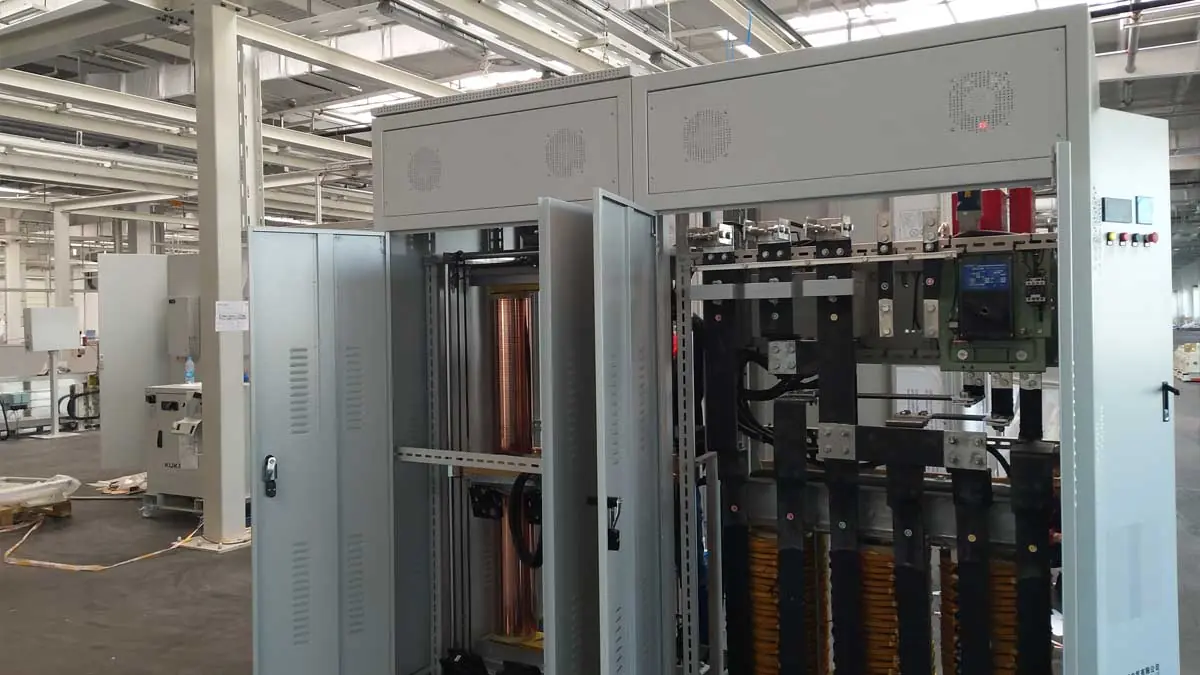
For the E-Bora Battery PACK-related production project at FAW-Volkswagen’s East China Production Base, Winzele supplied a 1200 kVA industrial voltage stabilization system. Customized busbar interfaces integrated it with the factory distribution system, with electrical parameter monitoring and a maintenance bypass. View the Volkswagen Battery PACK project.
This servo application shows that an automated production line can use a servo solution that meets its supply requirements. Assess the actual loads, distribution interfaces and maintenance supply arrangements rather than choosing a technology solely because the load is described as “precision equipment.”
What If Maintenance Is Difficult or Frequency Control Is Needed?
Where regular maintenance of mechanical regulating mechanisms is difficult, give priority to assessing static equipment.
SBW servo stabilizers require checks of regulating contacts, drive mechanisms and electrical connections. Static equipment removes the moving mechanical voltage-regulating mechanism, but it is not maintenance-free. Cooling systems, power devices and protective circuits still need inspection.
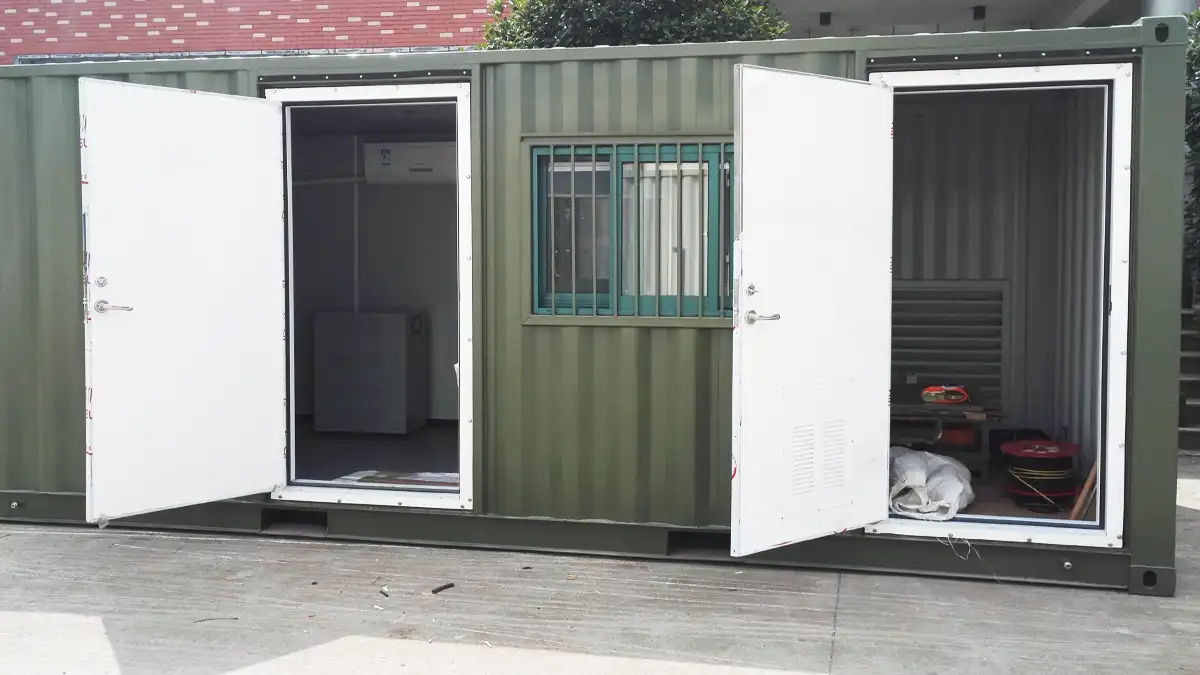
Winzele’s mobile communication equipment SCR project uses either a temporary external AC supply or an onboard generator. Vibration-reducing pads were also fitted during installation. This illustrates how supply sources, transport and deployment conditions influence the design.
If the project needs frequency stabilization or 50 Hz / 60 Hz conversion, assess a suitably configured Winzele WPZ solution and check the target frequency and permissible deviation. SBW and SCR output frequency follows the input supply and cannot be adjusted independently. WPZ uses an AC–DC–AC architecture to control output voltage and frequency according to the project configuration.
The initial selection can be summarized in three points:
- For sustained voltage deviation, assess SBW first.
- When rapid voltage changes disrupt equipment, focus on the static solution’s output recovery performance.
- For frequency stabilization or conversion, assess WPZ IGBT equipment.
For continuous production, plan maintenance windows, bypass functions and supply arrangements during switching in advance.
To start an assessment, prepare the equipment nameplate details, the site’s highest and lowest measured voltages, and continuous and starting currents. Include alarm records if available. Submit the project information to Winzele to narrow down the models and configurations.


