

Static vs Servo Voltage Stabilizers: Comparing Performance, Maintenance and Operating Costs
When you receive proposals for a servo and a static voltage stabilizer, first align the input disturbances, load and output tolerance used for testing. Compare the results, then assess maintenance, bypass supply and operating costs. The same kVA rating, or a smaller response-time figure, is not enough to decide between them.
If both proposals meet the equipment’s supply requirements, losses, repair access and downtime arrangements become important deciding factors. If one fails a necessary supply requirement, a lower price cannot make up for that shortfall.
Put Both Proposals on the Same Test Basis
An SBW servo voltage stabilizer moves regulating brushes with a motor. An SCR static voltage stabilizer switches transformer compensation states using thyristors. The Winzele WPZ IGBT stabilizer uses AC–DC–AC conversion and can control output voltage and frequency according to the project configuration. Before comparing figures, establish that both proposals address the same supply task. A project requiring independent output frequency control, for example, cannot be assessed on voltage accuracy alone. For the detailed designs, see how static voltage stabilizers work and their main types.
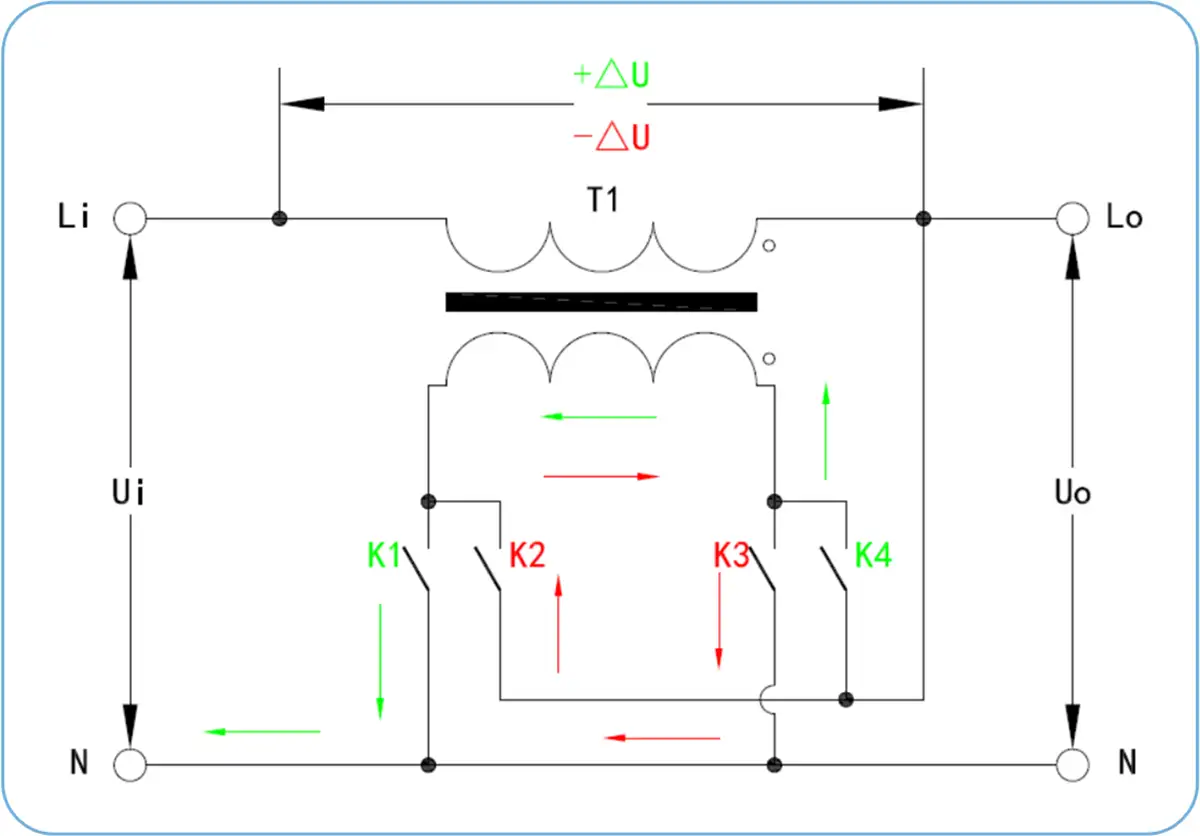
Use one test-condition sheet for both proposals, then check that their data correspond to it:
| Comparison item | Conditions to align between proposals |
|---|---|
| Input disturbance | Voltage before and after the change, upward or downward direction, disturbance profile and duration. |
| Test load | Load percentage, load type and three-phase imbalance; specify peak current and duration where starting surges apply. |
| Output acceptance criterion | Target voltage, permissible tolerance, measurement method and required time within the tolerance band. |
| Operating conditions | Ambient temperature, cooling conditions and test duration. |
Assess the input range together with load capability. A model that can operate at a low input voltage does not necessarily deliver the required output continuously at that voltage. Ask for the permissible current and any derating or current-limit conditions at the site’s minimum input voltage. That is more useful than comparing range percentages alone.
Separate Response Time, Settling Time and Steady-State Accuracy
Check where the response-time measurement starts and ends. Some specifications measure up to the issue of a controller command; others use different criteria. A figure for the start of a response does not tell you when the output begins to change or when it returns to an acceptable value.
Then check how long the output takes to enter and remain within tolerance. This is usually the concern of a settling-time measurement. The test record should also show whether the output leaves the load’s acceptable range during correction, rather than reporting only a final acceptable value.
Match steady-state accuracy to the agreed input and load conditions. A specification such as ±1% needs a stated input range, load basis and measurement method. A result at one operating point cannot automatically be treated as a guarantee across the full operating range.
The most useful evidence is a record of input and output with the test conditions stated. It should show the disturbance, the start of correction and the return to acceptable output. If one proposal supplies controller delay and the other supplies output settling time, ask for a common measurement basis before comparing the numbers.
Assess Maintenance Together with Bypass Supply
For servo equipment, focus on brushes, regulating contact surfaces and drive components. Checks include wear, contact condition and any lubrication or mechanical-clearance checks required by the design. Static equipment removes the moving mechanical regulating parts, but power devices, driver boards, terminals, protective devices and cooling systems still need inspection as fitted.
Ask both suppliers for maintenance tasks, recommended intervals, required downtime and spare parts lists. Can site personnel perform the inspections? Can components be replaced from the front? Does a repair require returning the unit to the factory? Each affects maintenance cost. Removing brushes does not automatically justify longer inspection intervals: dust, temperature and operating load still influence inspection needs.
For continuous production, establish how the load will be supplied during maintenance. For a proposal with bypass, document at least three points:
- Who operates it, and whether the equipment must be stopped for transfer.
- Whether the transfer interrupts supply, and whether the load can tolerate that interruption.
- Which protections remain active, and whether bypass voltage and frequency still meet the load’s requirements.
A direct bypass normally supplies the load from the incoming source. Retaining a protective circuit does not mean that voltage or frequency regulation continues. If the bypass source does not meet the equipment’s requirements, a separate maintenance supply arrangement is needed.
Calculate Long-Term Costs for the Same Operating Duty
Installation. Compare cabinet dimensions, cable entry, foundations, ventilation and distribution modifications. The equipment price may not include these costs.
Operating losses. Compare efficiency, or the difference between input and output active power, under the same input and load conditions. Estimate the cost of losses using actual operating hours. Where the load varies considerably, calculate by operating condition rather than treating one full-load efficiency figure as representative of the entire year.
Spares and repairs. Compare recommended spare parts prices, expected replacement frequency, delivery times and on-site repair arrangements. Stocking decisions should reflect procurement lead times and downtime exposure. The labels “servo” and “static” alone do not establish which will be cheaper to repair.
Downtime. Include the time needed for routine maintenance and fault repairs. In continuous production, equipment that can be repaired within a planned maintenance window, with a usable maintenance supply arrangement, may fit the site better than a lower-priced proposal that is difficult to restore to service.
Record the Comparison in the Technical Agreement
Before making the final comparison, both proposals should answer four questions: Can the unit support the required load across the site’s input range? How long does it take to restore acceptable output after the agreed disturbance? How is the load supplied during maintenance? How are losses, spares and repair time assessed?
Define the test conditions, output acceptance criteria and records to be delivered so the prices have a common basis. With the two proposals and site measurements ready, send Winzele your equipment and supply information to review model suitability and test requirements.


