

50KVA 380V to 220V Three Phase Dry Type Isolation Transformer for Industrial Equipment Voltage Adaptation
1. Project Overview
Shanghai Ahwit Precision Machinery Co., Ltd. is a precision mechanical component manufacturer producing high-precision parts for scientific instruments, medical equipment, transportation systems and other advanced manufacturing sectors. In precision machining, the stability of the machine tool and the quality of its power supply directly affect processing consistency and equipment availability, so the electrical infrastructure around the machines receives the same attention as the machines themselves.
The customer’s precision machining workshop is built around DMG MORI five-axis machining centers. Imported CNC machining centers are normally designed according to the electrical standards of their country of origin, so when they are deployed in a different country or region, the local power network must be matched to the machine’s voltage system before the equipment can run reliably for long periods.
To support this requirement, Winzele supplied a batch of 20 units of SG-50KVA three phase dry type isolation transformers for the workshop, with delivery completed in 2025. The project scope is a batch deployment: 20 isolation transformers supplied for multiple DMG MORI five-axis machining centers, with one dedicated transformer installed for each machine.
The transformers were supplied, delivered and installed in the customer’s precision machining workshop, where each unit works as the power interface between the factory supply and its CNC machining center.
2. Power Supply Challenges for Imported CNC Machine Tools
Imported CNC machine tools are built to the electrical specifications of their manufacturer’s home market. When the same machine model is installed in another country, the factory power network frequently uses a different voltage system from the rated input of the machine. Before the machine is connected, this mismatch must be solved at the supply side. In this project, the workshop power network operates at 380V, while the imported DMG MORI machining centers in this project required a 200V three-phase supply. A 380V-to-200V adaptation is therefore required, and the DMG MORI CNC machine power supply in this workshop needs a matching interface before any of the machines can be operated properly and reliably.
For a five-axis machining center, the power path is not a simple single load. The machine contains a control system, spindle drive and multiple servo axes, all of which are designed for the machine’s rated input voltage. Operating such equipment on an unmatched voltage system can cause protection trips, degraded drive performance or unreliable control behavior. For a workshop that depends on these machines for production, this is an operational risk that should be removed at installation time.
A CNC machine transformer is the standard way to handle the voltage adaptation for imported equipment. When the requirement is not only voltage matching but also electrical separation, a three phase isolation transformer adds isolation between the factory power network and the machine tool. This machine tool power supply arrangement addresses the actual deployment condition of imported CNC equipment voltage conversion without modifying the machine itself.
The design principle in this project is simple: each DMG MORI machine receives a matched, isolated power path through its own transformer, so that the imported machine operates on the voltage system it was designed for.
3. Isolation Transformer Solution
Winzele supplied the SG-50KVA three phase dry type isolation transformer, configured with a 380V primary and a 200V three-phase secondary and designed for precision manufacturing applications. The SG series is applied in this project to:
- Provide electrical isolation between the factory power supply and each CNC machining center. The transformer separates the machine’s power circuit from the workshop supply, which reduces the risk of supply-side disturbances.
- Support reliable power supply for CNC equipment. By adapting the 380V workshop network to the 200V three-phase input of the imported machine, the transformer gives each machining center a supply matched to its rated input.
- Serve as a compact machine tool transformer installed individually with each machine, rather than as one central unit feeding several machines.
The dry type construction is suited for in-workshop installation. Because the transformer is installed beside the machine tool, no separate transformer room is required, which simplifies the layout in an existing precision machining workshop and keeps the installation close to the load.
Each of the 20 machining centers receives its own dedicated transformer. This per-machine arrangement gives every CNC machine an independent adaptation and isolation point, which simplifies commissioning and keeps the power path for each machine separate from the others. If one transformer needs attention, the adjacent machines are not affected.
4. Batch Delivery Capability for Precision Manufacturing Facilities
This project is not a single-unit supply. It is a batch supply of 20 isolation transformers for 20 five-axis machining centers in one precision manufacturing facility. Batch delivery at this scale depends on several engineering and production capabilities.
Engineering coordination. Each transformer had to match the machine’s rated input voltage system and the local workshop power network. The specification was coordinated between the customer’s machine list, the workshop electrical condition and Winzele’s engineering team before production started. Confirming the interface conditions first is what makes a smooth batch delivery possible.
Standardized manufacturing. The 20 units were produced under the same manufacturing process and the same inspection procedure. Standardized manufacturing keeps the electrical and mechanical characteristics of every unit consistent, which matters when 20 machines in one workshop are supplied by 20 transformers that are expected to behave identically.
Consistent product quality. Every SG-50KVA unit went through the same routine checks, including insulation resistance, turns ratio and load performance verification, so the delivered batch performs uniformly in service. For the customer, this means maintenance staff work with one transformer model, and every machine receives the same power interface.
Delivery capability for multiple equipment installations. Supplying 20 units in a single project requires production scheduling, packaging and logistics coordination that single-unit projects do not demand. The transformers were delivered as a complete batch and installed alongside the machining centers according to the customer’s installation schedule.
For a precision machining facility, the practical value of batch delivery is operational consistency: one transformer model across the workshop, interchangeable spare parts, and identical power interfaces for every machine. This project demonstrates Winzele’s ability to support precision manufacturing facilities that standardize their equipment around imported CNC machine tools.
5. On-site Installation
The project was installed in 2025 in the precision machining workshop of Shanghai Ahwit. The on-site photos show the real industrial installation environment:
- Multiple DMG MORI five-axis machining centers arranged in the precision workshop.
- Each machining center equipped with a dedicated SG-50KVA isolation transformer.
- Each transformer installed beside its CNC equipment, with a compact footprint that does not interfere with machine access or material flow.
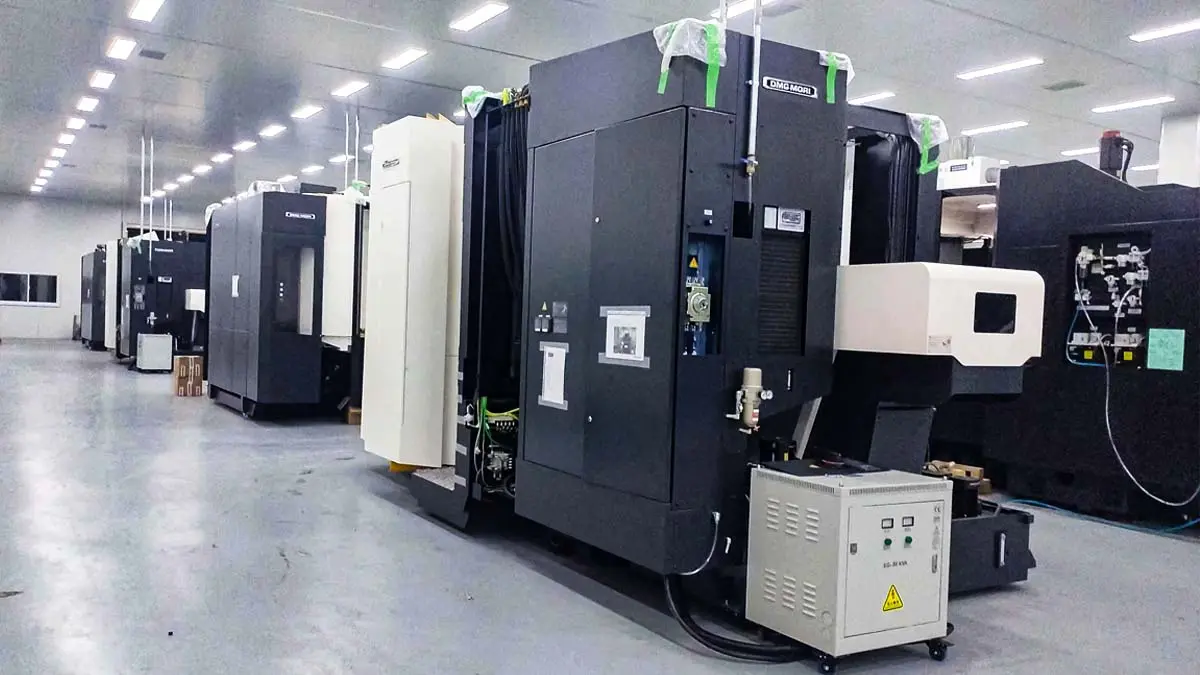
Figure 1 — Transformer installation beside the DMG MORI five-axis machining centers at Shanghai Ahwit precision machining workshop.
The installation pictures are taken directly in the workshop, showing the transformers in their actual operating positions next to the machining centers. This is a working production environment rather than a demonstration setup.
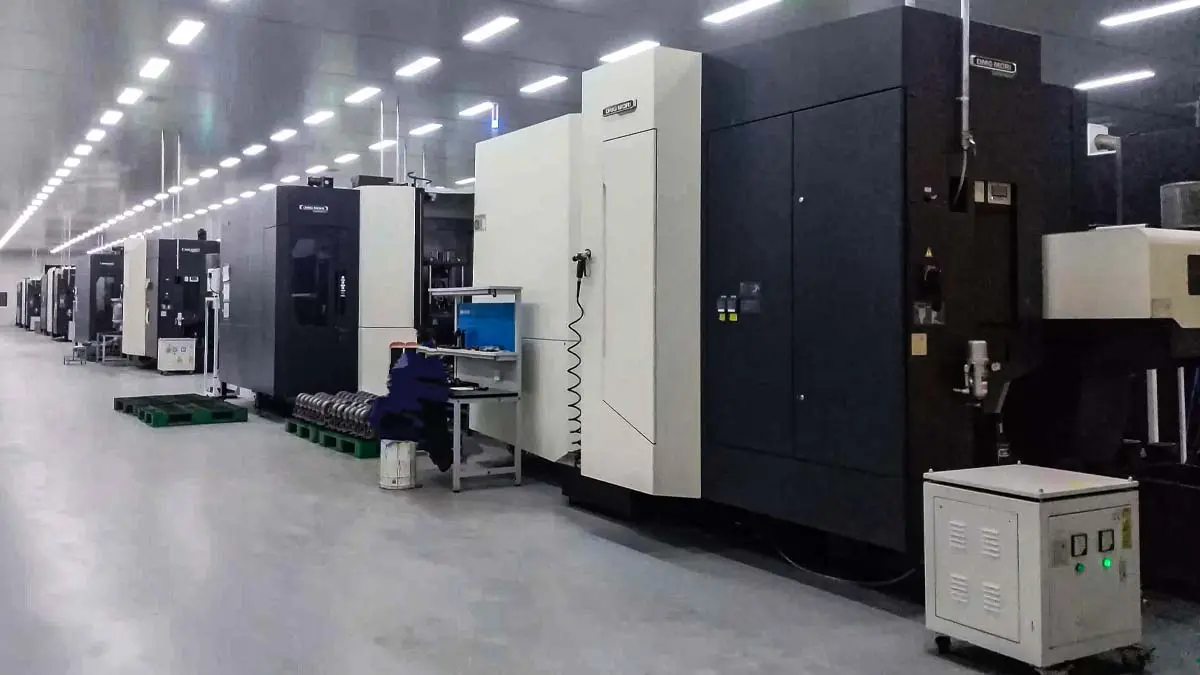
Figure 2 — Transformer commissioning after installation, powering the DMG MORI five-axis machining centers in the workshop.
The per-machine installation layout also simplifies maintenance. Each transformer can be inspected without affecting the adjacent machine, and the wiring for every unit is clearly separated. This arrangement reflects the way the transformers are actually used in daily production.
6. Why Choose Winzele Isolation Transformer
The selection of Winzele for this project was based on capabilities that are directly relevant to precision manufacturing:
- Custom voltage solutions. Imported machine tools often require voltage adaptation to the local power network. Winzele supplies dry type isolation transformers configured for the voltage requirements of the application, including precision machining transformer applications such as CNC machine tools, and projects involving imported CNC equipment voltage conversion such as the 380V-to-200V adaptation described in this project.
- Dry type transformer manufacturing experience. SG series transformers are produced under standardized processes, with routine testing on every unit before delivery.
- Industrial application experience. Winzele transformers have been applied in machining, medical imaging, analytical instruments and other industrial equipment installations, giving the engineering team practical reference for machine tool power supply design.
- Batch production capability. As this project shows, Winzele is able to deliver transformers in batches for facilities with multiple equipment installations, with consistent quality across the batch.
- Technical support. Winzele supports the customer through specification confirmation, installation guidance and after-sales service, which is particularly useful when a batch of machines must be commissioned in one facility.
For precision machining facilities using imported CNC machine tools, a three phase isolation transformer provides the voltage adaptation and electrical isolation needed for reliable long-term operation. As an industrial transformer supplier, Winzele focuses on matching the transformer to the actual application, the actual machine and the actual site condition.


