

How a 1000 kVA Voltage Stabilizer Blocked an Incorrect Phase Sequence at Diamond Regional Hospital
When utility power returned after an outage at Diamond Regional Hospital in Guyana, the voltage was present—but the phase sequence was wrong. The hospital’s 1000 kVA voltage stabilizer detected the abnormal supply and kept the normal power path from closing. Meanwhile, the automatic transfer switch (ATS) kept the hospital on generator power.
After the upstream connections were corrected, the stabilizer closed normally, the ATS transferred the load back to utility power, and the system returned to a stable 480 V supply. No downstream equipment damage was reported.
The Hospital Power System
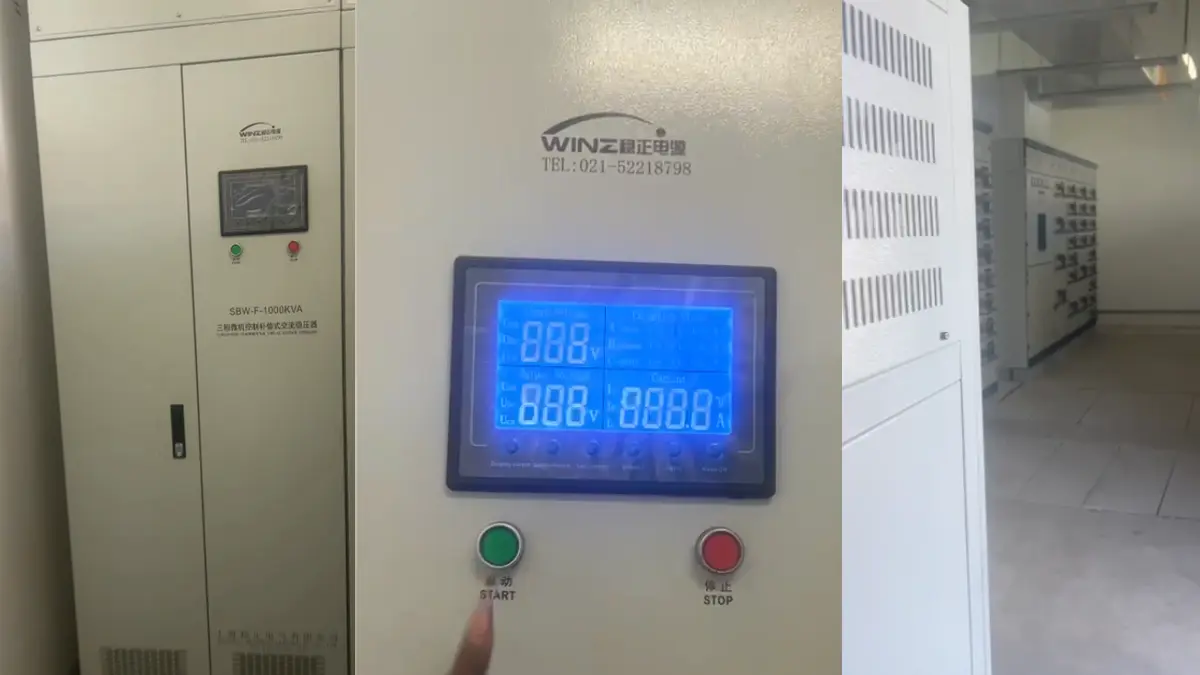
Winzele supplied Diamond Regional Hospital with a 1000 kVA, 480 V/60 Hz three-phase voltage stabilizer. It is installed in the normal utility power path, between the upstream step-down transformer and the normal input of the ATS. A generator set supplies the ATS backup input, and the ATS output feeds the hospital distribution system.
Utility Grid
    ↓
Upstream Step-Down Transformer
    ↓
1000 kVA, 480 V / 60 Hz Voltage Stabilizer
    ↓
ATS Normal Input ───────────────┐
                                ├── ATS → Hospital Loads
Generator Set → ATS Backup Input┘
The stabilizer regulates the normal utility supply and checks its condition before allowing the normal-source circuit to close. The ATS handles the transfer between utility and generator power.
What Happened
Utility power was interrupted at approximately 6:30 a.m. Guyana time. The ATS transferred the hospital load to the generator, allowing the facility to continue operating on backup power.
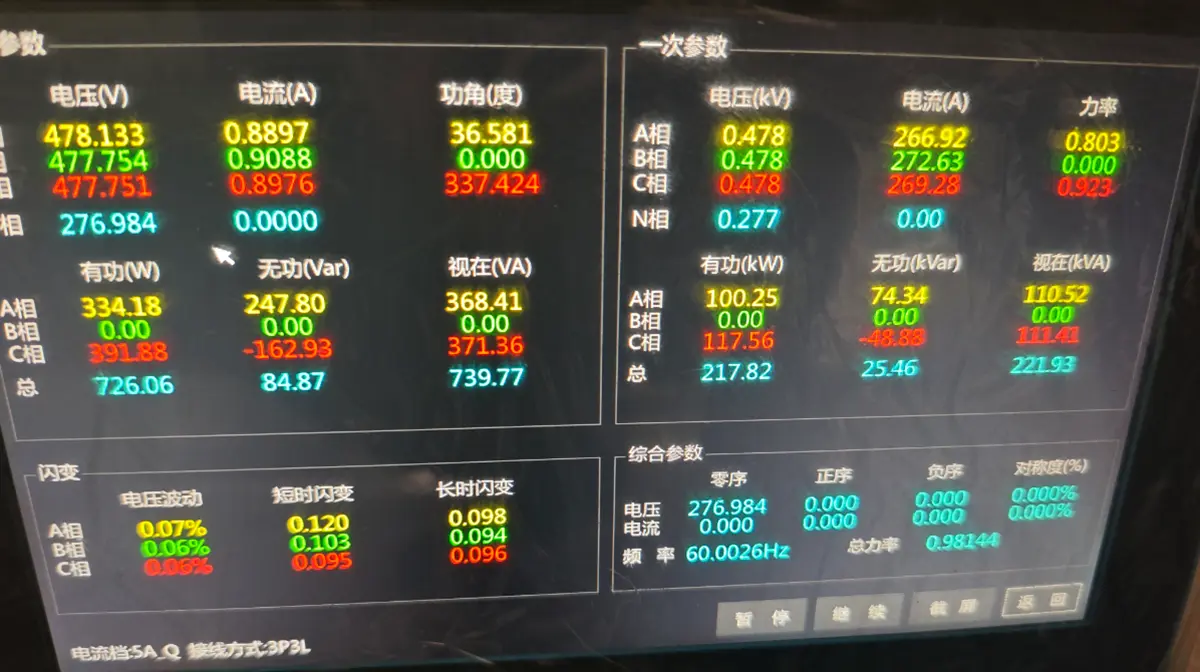
Utility voltage returned at approximately 8:30 a.m., but the stabilizer did not make the normal source available to the ATS. Its control panel indicated a phase sequence fault, and the closing command to the 2000 A MCCB was blocked.
The phase-sequence check was performed by the stabilizer’s built-in controller algorithm; no separate phase-sequence relay was used.
This was not an internal stabilizer failure. The restored utility supply had returned with a different phase sequence. Although voltage was present, the incoming supply did not meet the conditions required for the normal-source circuit to close. The ATS therefore remained on generator power while the site team investigated.
On-Site Diagnosis
The checks showed that the stabilizer was healthy and that all three input phase voltages were present. The incoming phase sequence, however, was reversed from the hospital’s normal operating sequence.
The phase sequence had changed following work on the upstream utility line. Personnel from Guyana Power & Light Inc. (GPL) arrived at Diamond Regional Hospital at approximately 6:40 p.m. and confirmed the incoming phase sequence issue.
Phase Sequence Protection Indication During On-Site Diagnosis
The field video shows the SBW-F-1000KVA stabilizer indicating a phase sequence fault and preventing the 2000 A normal-source MCCB from closing.
Correction and Return to Utility Power
GPL corrected the upstream phase connections at approximately 8:45 p.m. No changes or repairs were required inside the stabilizer.
Once the corrected supply was verified, the stabilizer closed normally and made the normal utility path available again. The ATS then transferred the hospital load back from the generator according to its automatic retransfer logic.
Final checks recorded a stable 480 V output. The phase sequence was correct, the stabilizer and connected hospital equipment were operating normally, and no downstream equipment damage was reported.
Why the Protection Mattered
A three-phase supply can have normal voltage magnitude and still have the wrong phase order. If that supply reaches equipment that depends on phase rotation, conventional three-phase motors can run in the opposite direction. Pumps, fans, compressors and other rotating equipment may then operate incorrectly or create additional mechanical and process risks.
In this event, the stabilizer did not attempt to correct the external wiring. It detected that the normal supply was unacceptable and kept the 2000 A MCCB from closing. This prevented the incorrect utility phase sequence from being presented to the ATS as an available normal source.
The wider system then performed as intended. The ATS maintained the generator source while the utility condition was investigated, and the generator continued supplying the hospital until the normal source was corrected and verified.
The incident demonstrated three distinct functions working together:
- The voltage stabilizer checked and regulated the normal utility source.
- The ATS selected between the normal and backup sources.
- The generator maintained backup power during the utility interruption and investigation.
For hospital and other critical facilities, a source should not be accepted simply because voltage has returned. Phase sequence, phase loss and voltage conditions must all be suitable before the normal power path is restored.
Project Outcome
The stabilizer’s correctly inhibited closing was the correct protective response to an abnormal incoming supply. It gave the site team a clear indication of where to investigate, kept the incorrect utility source away from the ATS normal input, and required no equipment repair after the external phase connections were corrected.
This follow-up event also adds an important operating result to the original Guyana hospital installation: the protection logic was not only included in the design—it worked during a real utility disturbance after commissioning.


