

What are the uses of transformers with D/Y connection groups?
In a three-phase transformer, one side of the primary or secondary winding is always connected in a delta configuration. This is to avoid the presence of third harmonic components in the main magnetic flux, thereby reducing eddy currents and localized heating, and improving the transformer’s efficiency and reliability. To understand the principle, we need to first understand the basics of three-phase transformers.
1. There are two types of three-phase transformers:
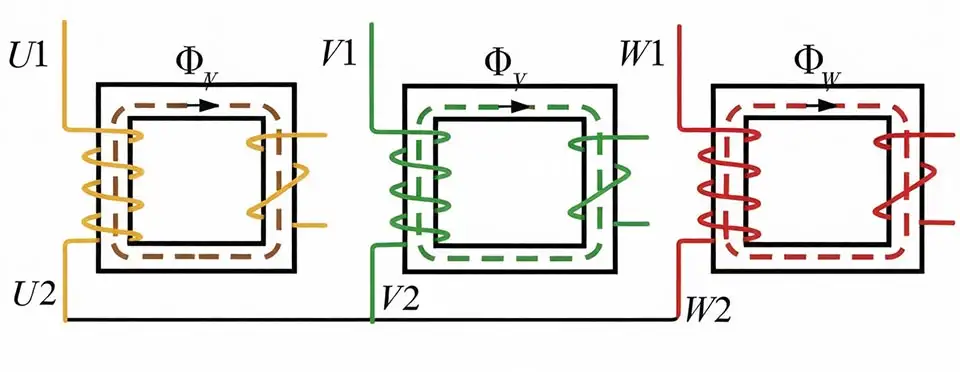
One is the group-type three-phase transformer (Figure 1):
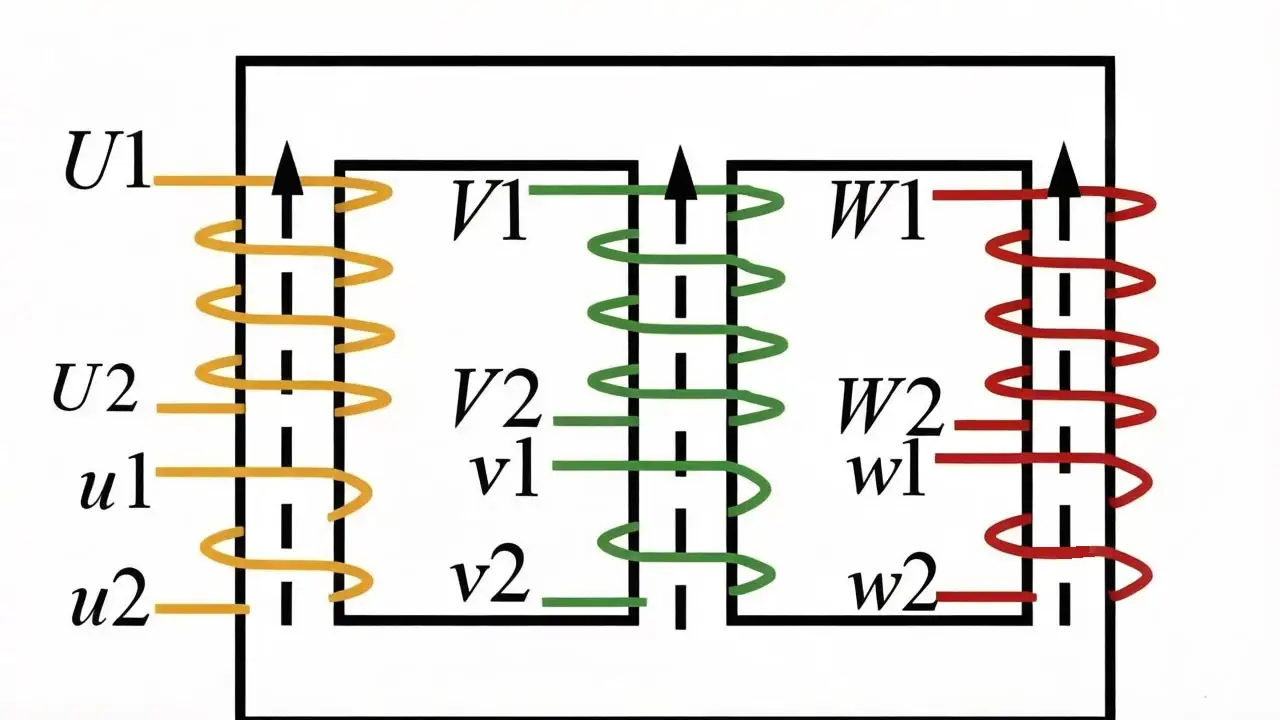
The other is the three-phase core-type transformer (Figure 2):
A group-type three-phase transformer is composed of three single-phase transformers connected by windings to form a three-phase transformer. Its characteristic is that the three-phase electromagnetic circuits are independent, and the third harmonic flux can flow. Large three-phase transformers rarely use this group-type transformer, so it will not be discussed further.
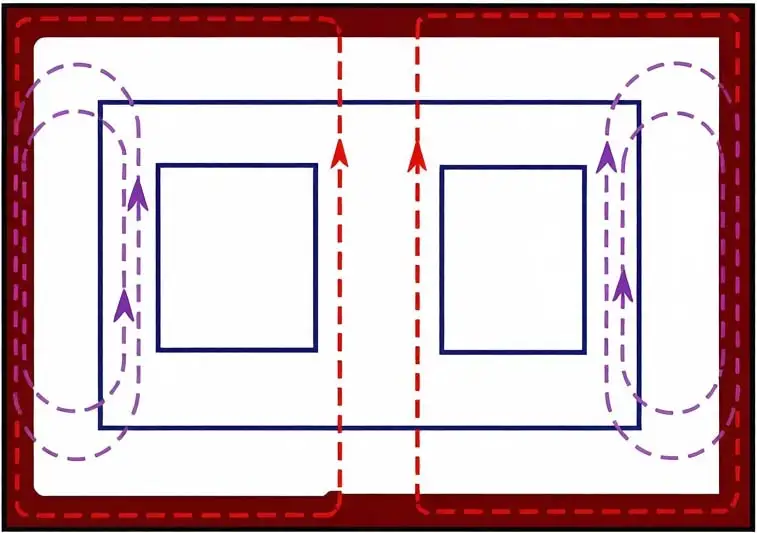
Large power transformers are usually three-phase core-type transformers. Their characteristic is that the three-phase magnetic circuits are interconnected. For the magnetic circuit of a three-limb iron core, there is no direct path for the third harmonic flux. Therefore, the third harmonic flux can only form a loop through the leakage magnetic circuit, such as the transformer casing. The transformer casing is usually made of steel plates, and the presence of third harmonic flux will cause severe heating.
The path of the third harmonic magnetic circuit in a three-phase core-type transformer (Figure 3)
2. Waveforms of voltage (potential), excitation current, and magnetic flux under different magnetic circuit and circuit structures.
2.1 A sinusoidal excitation current generates a flat-topped magnetic flux (Figure 4).
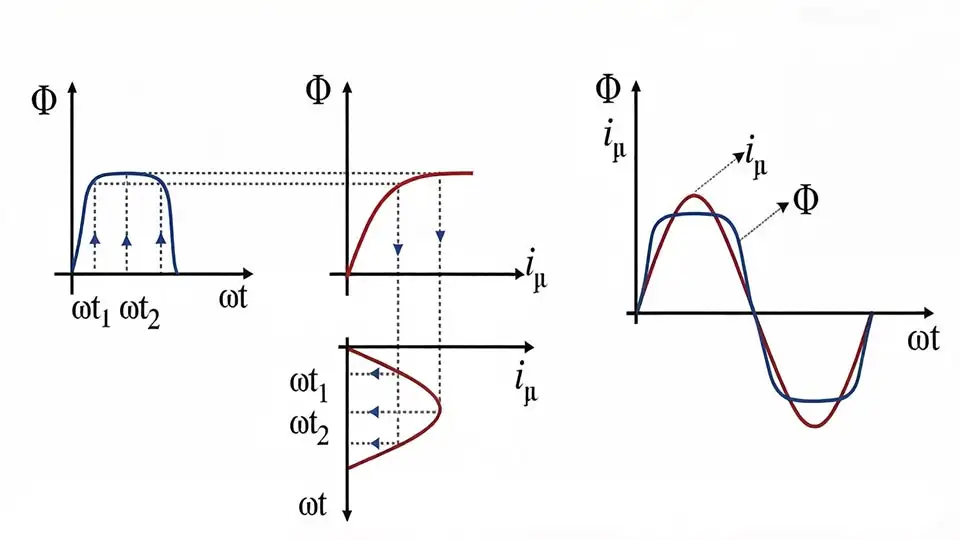
When the core is saturated: when the magnetic flux is a flat-topped wave, the magnetizing current is a sine wave.
2.2 A peaked excitation current generates a sinusoidal magnetic flux (Figure 5).
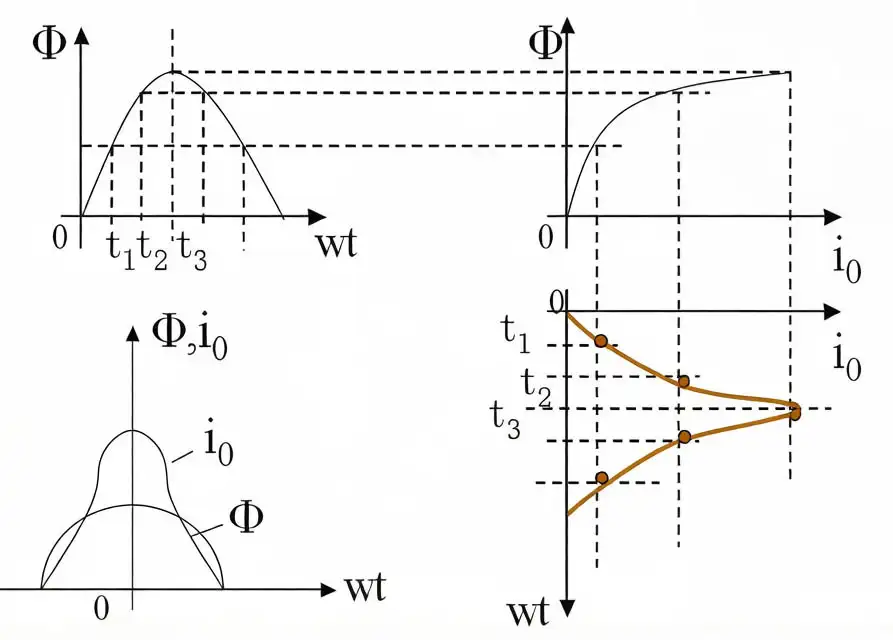
No-load excitation current waveform.
2.3 Both flat-topped and peaked waves can be decomposed into the fundamental wave and the third harmonic (Figure 6).
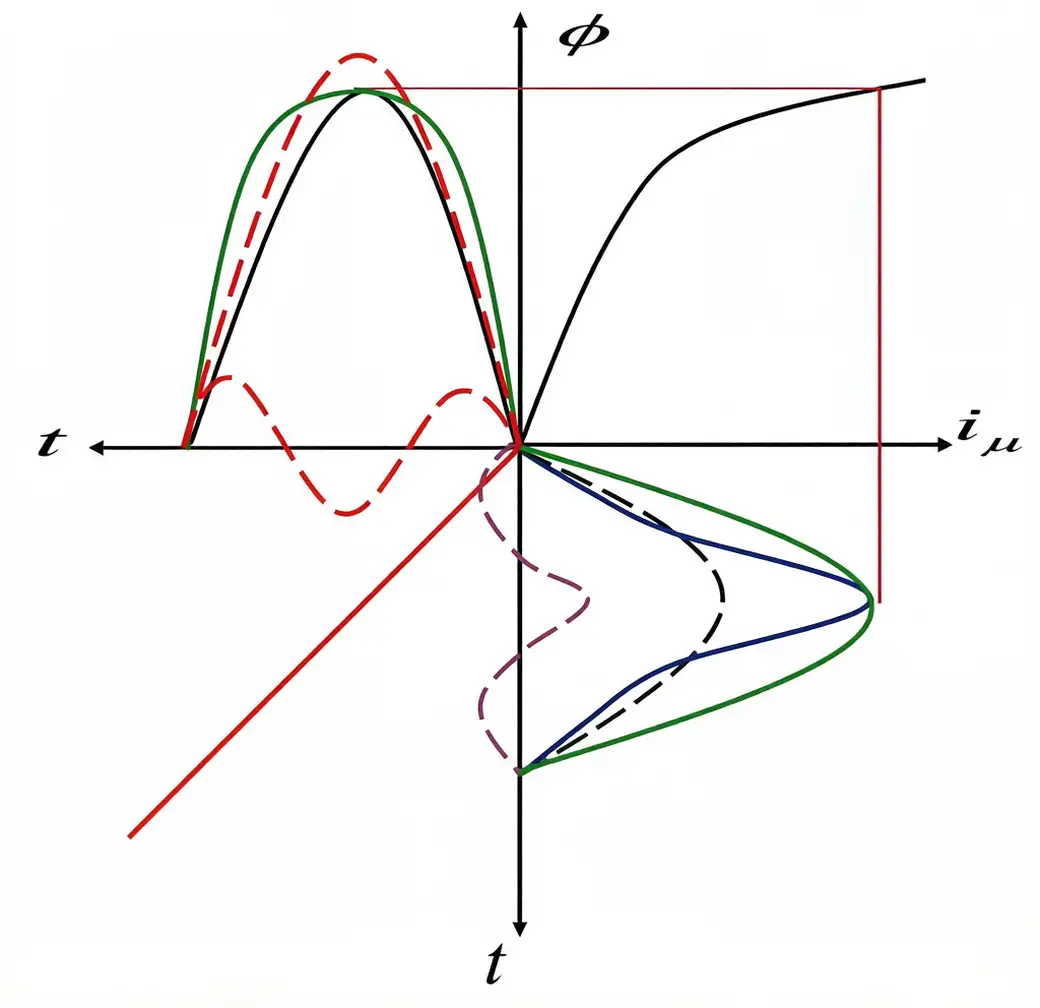
No-load electromotive force waveform of a three-phase transformer. When the magnetic circuit is saturated, to obtain a sinusoidal magnetic flux, the excitation current should be a peaked wave.
When the magnetic circuit is saturated, if the excitation current is a sine wave, the main magnetic flux is a flat-topped wave.
3. Having understood the above basic knowledge, we will now proceed with the analysis. If both the primary and secondary sides are Y-connected, there is no path for the third harmonic of the current. Therefore, in a Y/Y connection, the excitation current can only be a sinusoidal current. This sinusoidal excitation current can only generate a flat-topped magnetic flux, which can be decomposed into a fundamental flux and a third harmonic flux.
These third harmonic fluxes in the main magnetic field are equal in magnitude and phase. They cannot close through the core and can only form loops in the leakage magnetic circuit, such as in the oil, tank walls, and yoke, generating eddy currents, causing localized heating, and reducing transformer efficiency.
Therefore, large-capacity and high-voltage three-phase transformers are not suitable for Y/Y connections.
In contrast, when the windings are connected in a delta/Y or Y/Δ configuration, a loop path is provided for the third harmonic component of the excitation current in the delta connection on the primary or secondary side. Therefore, the excitation current in the delta-connected winding is a peaked wave. The peaked current keeps the main magnetic flux sinusoidal without a third harmonic component.
Especially when the windings are connected in a Y/Δ configuration, although the third harmonic in the primary side excitation current cannot pass through, a third harmonic circulating current is generated in the secondary side delta connection. This circulating current, together with the sinusoidal excitation current on the primary side, ensures that the main magnetic flux is sinusoidal, thus avoiding localized heating caused by third harmonic eddy currents.
In summary, the primary or secondary windings of a three-phase transformer are connected in a delta configuration to ensure that the main magnetic flux is as close to a sinusoidal wave as possible, avoiding eddy currents and heating problems caused by third harmonics, thereby improving the transformer’s operating efficiency and reliability.


